Examine the Shroud of Turin for yourself
A linen cloth, 4.4 meters long, carries the faint image of a man who was scourged and crucified. Some call it a medieval forgery. Others call it the burial cloth of Jesus. Here is the evidence from both sides, with every source, so you can judge it yourself.
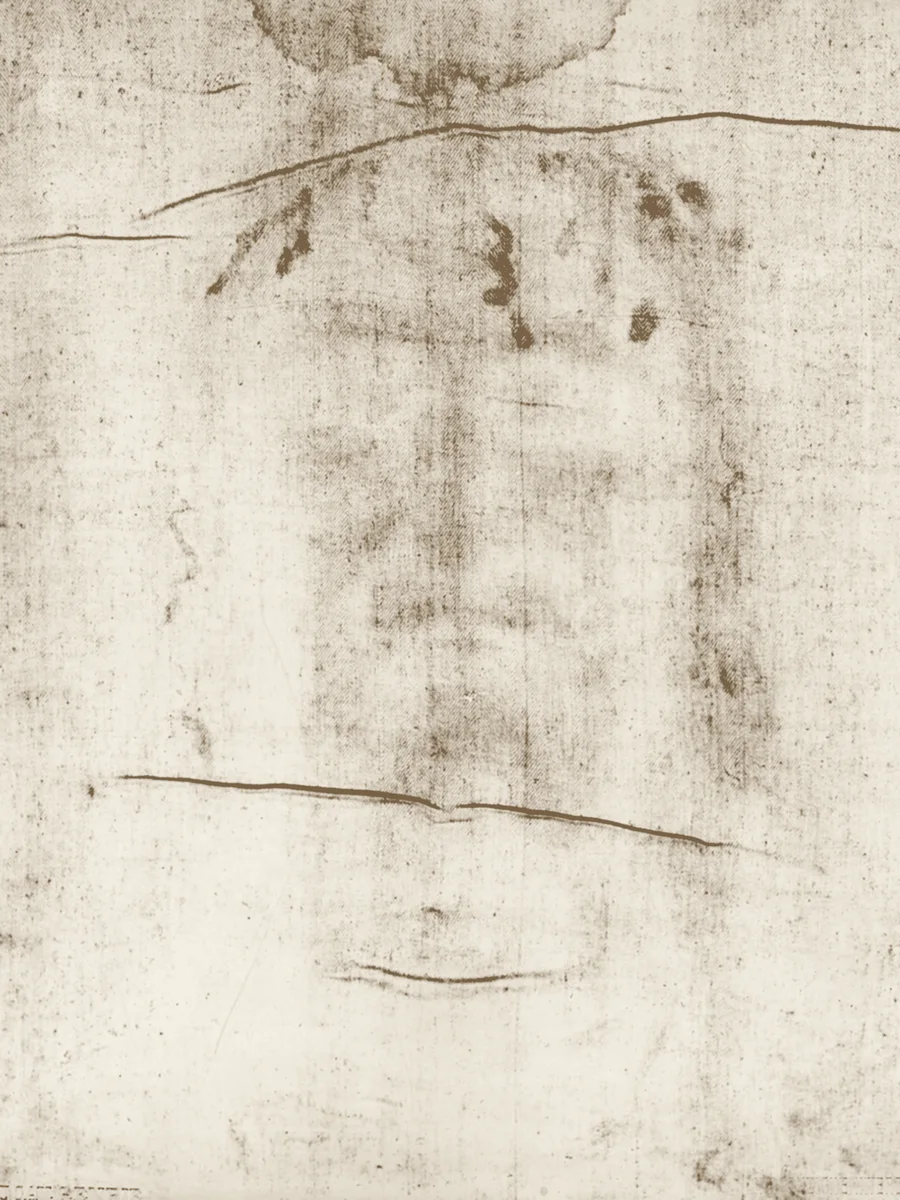
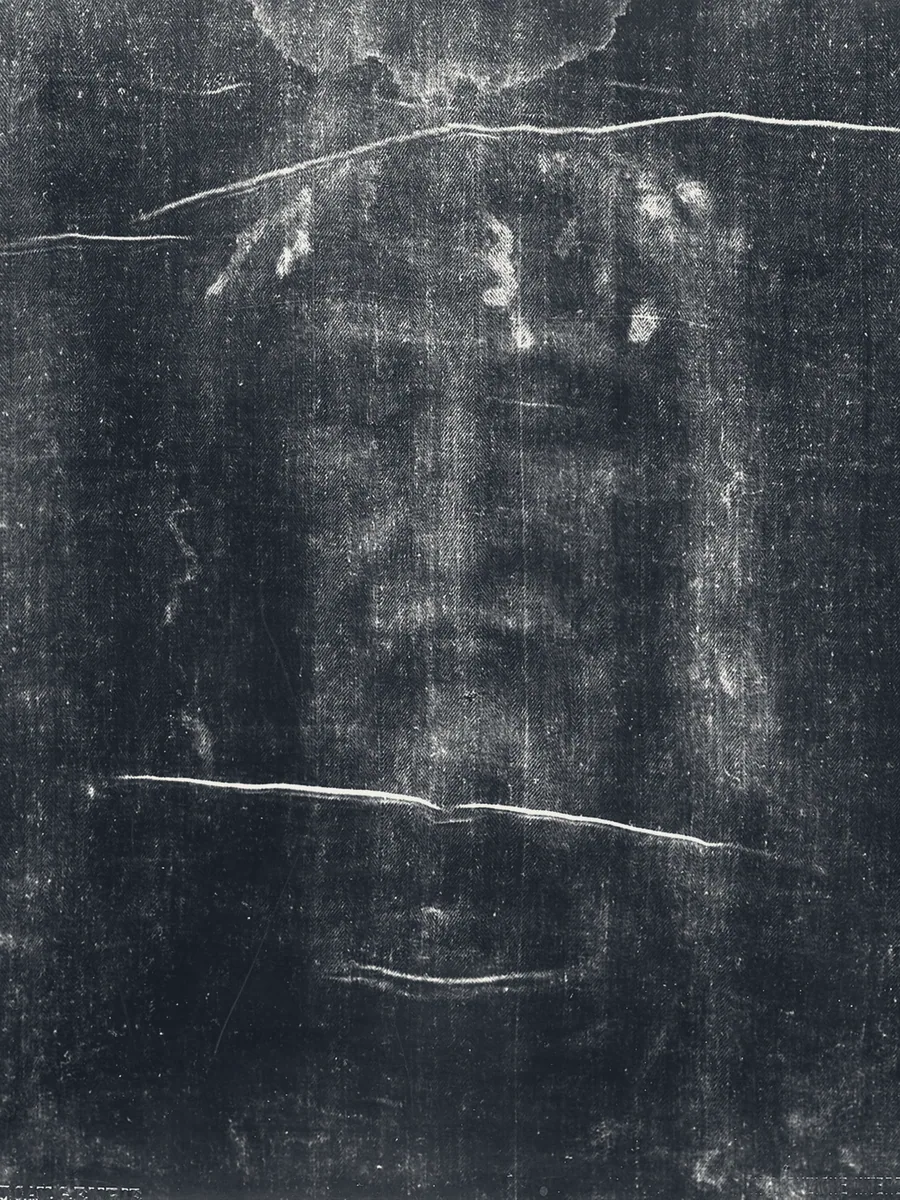 Watch the plate develop
John 20:24-31
24 But Thomas, one of the twelve, called Didymus, wasn't with them when Jesus came.
25 The other disciples therefore said to him, "We have seen the Lord!" But he said to them, "Unless I see in his hands the print of the nails, put my finger into the print of the nails, and put my hand into his side, I will not believe."
26 After eight days, again his disciples were inside and Thomas was with them. Jesus came, the doors being locked, and stood in the middle, and said, "Peace be to you."
27 Then he said to Thomas, "Reach here your finger, and see my hands. Reach here your hand, and put it into my side. Don't be unbelieving, but believing."
28 Thomas answered him, "My Lord and my God!"
29 Jesus said to him, "Because you have seen me, you have believed. Blessed are those who have not seen and have believed."
30 Therefore Jesus did many other signs in the presence of his disciples, which are not written in this book;
31 but these are written that you may believe that Jesus is the Christ, the Son of God, and that believing you may have life in his name.
John 20:24-31, World English Bible (public domain)
Thomas asked to see the marks
This site is named after the most honest skeptic in the Gospels. Thomas did not believe what his friends told him. He wanted evidence he could see and touch: the marks of the nails, the wound in the side.
The Shroud of Turin shows a man with marks of the same kind. Whether it is what many believe it is, is the question this site leaves to you. We will show you the marks, the tests, the doubts and the answers, and point you to every source.
What it is
A single piece of linen with a front and a back image of a naked man, head to head, plus blood stains, burn marks and water stains from its long history. It has been kept in Turin, Italy, since 1578, apart from the Second World War.
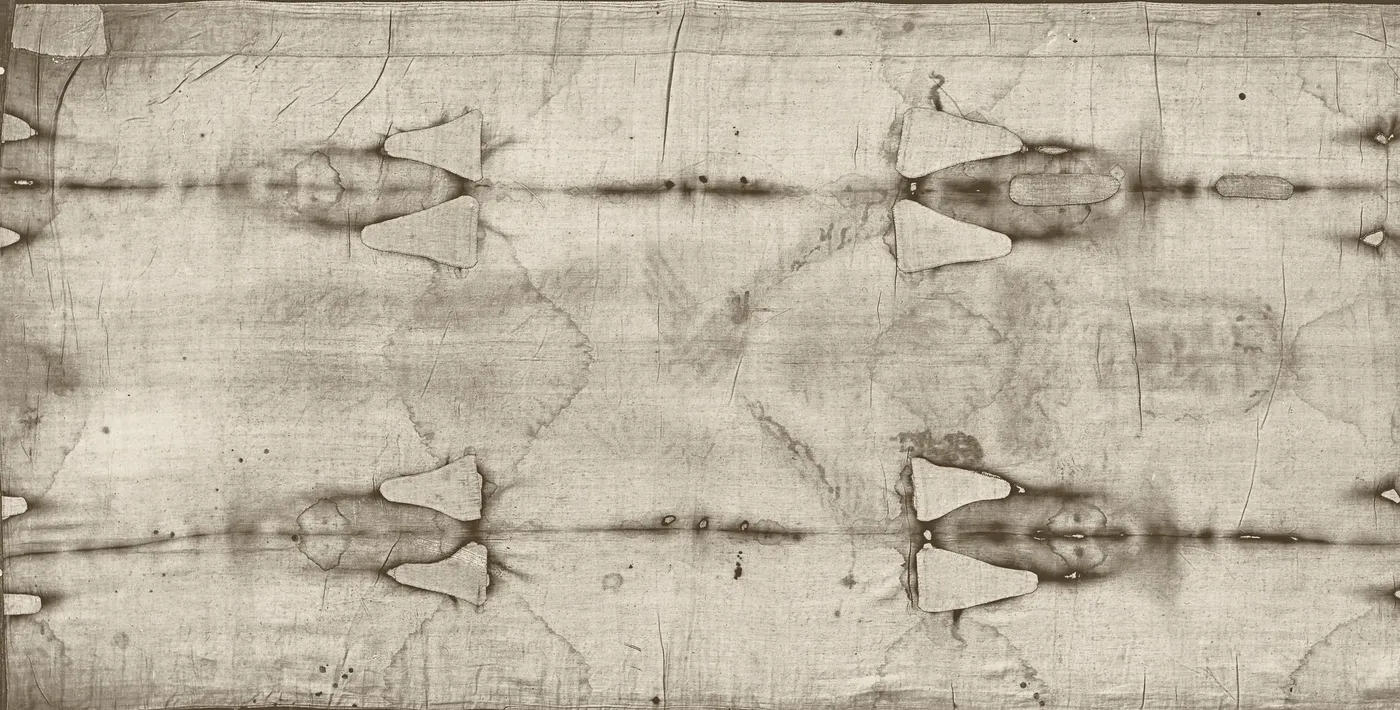 Front image
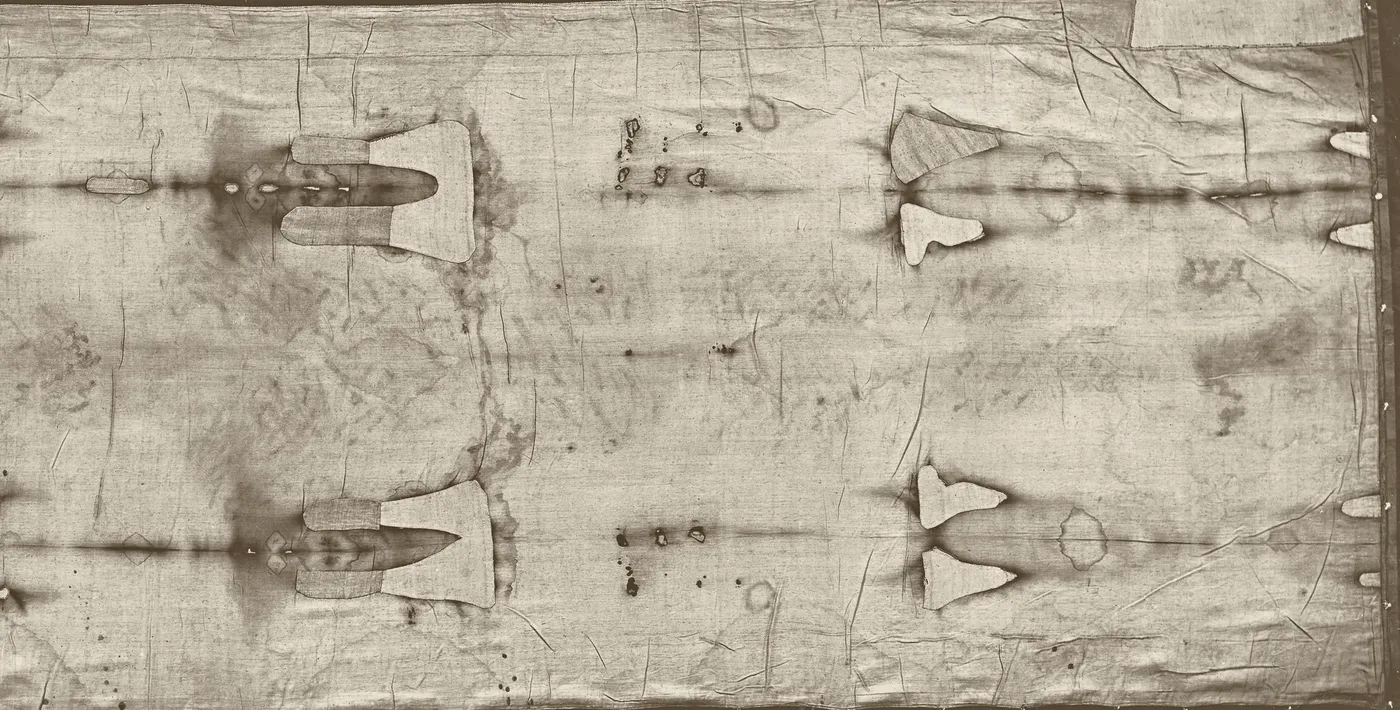 Back image
Turin, 28 May 1898
The night a photograph changed the question
Secondo Pia, a lawyer and amateur photographer, was allowed to take the first photographs of the cloth. When he developed his glass plate, he expected to see a reversed, ghostly image. Instead, the negative showed a clear, natural portrait of a man.
The image on the cloth behaves like a photographic negative: light and dark are reversed. Nobody had noticed this before, because no one had seen the image reversed until it was photographed. It is the reason modern study of the Shroud began.
The skeptic's answer: an image made by pressing cloth onto a relief, or by rubbing powder over it, is also tonally reversed. So a negative image does not by itself require a photograph or a miracle. The real question is whether such methods match everything else about the image.
It holds 3D information
In 1976, physicist John Jackson and engineer Eric Jumper put a photograph of the Shroud into a VP-8 Image Analyzer, a device built to turn brightness into height. Ordinary photographs come out distorted. The Shroud came out as a coherent body in relief.
The reason: how dark the image is at each point seems to track how far the cloth was from the body at that point. The measurement behind this, published in 1984, was modest: 13 points, with a correlation of r squared 0.60 and a wide margin of error. But the effect is easy to see. This 3D view is built the same way, live in your browser, straight from the image. Drag it to turn it.
The skeptic's answer: images made from a shallow relief, such as a bas-relief rubbing, also carry some depth information. In 2025 a 3D designer, Cicero Moraes, argued from computer simulation that the image fits a low relief better than a full body. The debate is over how well each method matches the real cloth.
The marks of a crucifixion
Forensic pathologists who studied the image describe more than a hundred small wounds from a Roman scourge, puncture wounds around the head, a swollen face, abrasions on the shoulders, a nail wound in the wrist rather than the palm, and a wound in the side between the ribs that bled after death.
These fit the Gospel accounts, which mention scourging, thorns, blows, nails and a spear in the side. Several details, like the nail in the wrist, go against how medieval artists usually painted the crucifixion.
The test that said medieval
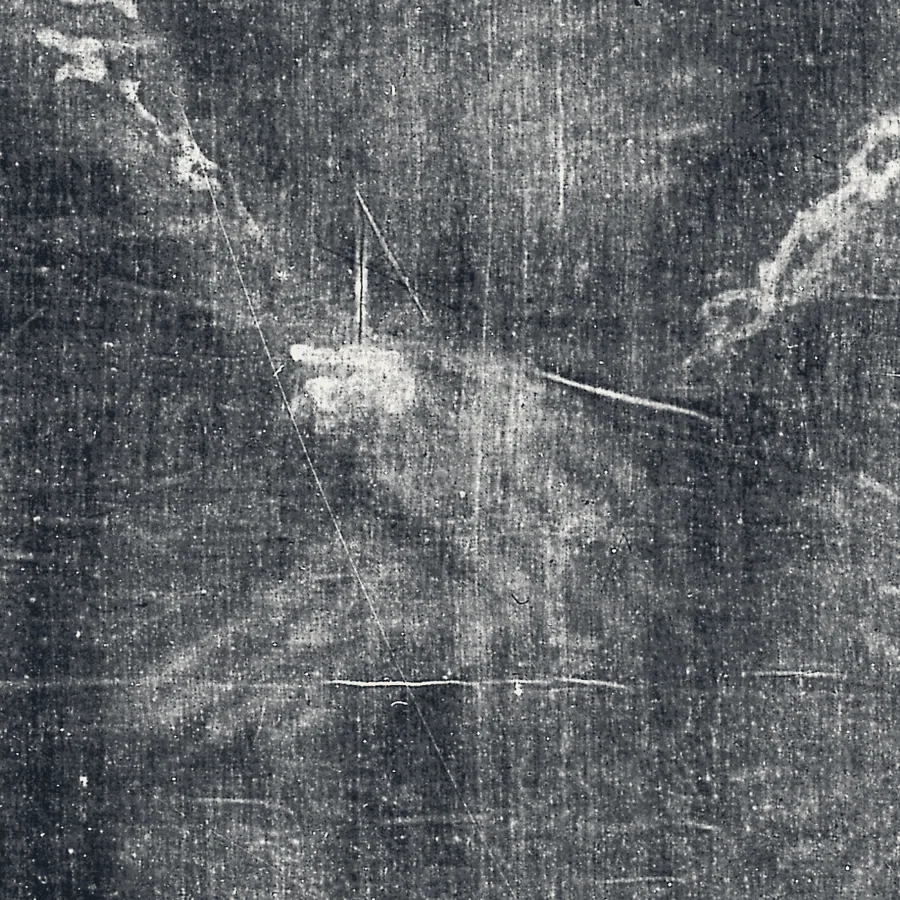
In 1988, three laboratories in Arizona, Oxford and Zurich carbon dated small samples from one corner of the cloth. Their combined result, published in the journal Nature in 1989, was 1260 to 1390 AD, with 95% confidence. This is the strongest single argument against authenticity, and we give it a full page.
Since then, researchers have questioned where the sample was taken from, whether the samples were consistent with each other, and whether the raw data supported the published precision. Other dating methods have given older dates, though none is as established as radiocarbon dating.
How did the image get there?
After more than a century of study, nobody has a complete answer. That is not a slogan, it is where the science stands. Here is one of the boldest hypotheses, shown as an animation.
The image is a straw-yellow color on the very top fibers of the linen. There is no paint, no brush strokes and no sign of the image soaking into the threads. It does not behave like an ordinary scorch: the real scorch marks from the 1532 fire glow under ultraviolet light, and the body image does not.
Researchers have proposed paint, a heated statue, powder rubbed over a relief, an early form of photography, a chemical reaction with gases from a body, and a burst of radiation. Each idea explains some features and struggles with others.
What a laser can and cannot do
Between 2005 and 2010, scientists at ENEA, Italy's national agency for new technologies, fired very short pulses of ultraviolet laser light at linen. Within a narrow range of settings, they colored linen a straw yellow similar to the Shroud, without burning it. In most fibers the color went deeper than on the Shroud. In at least one fiber it stayed in the thin outer wall, as on the Shroud.
As a rough sum, they multiplied the laser intensity that worked by the area of a human body. The answer, about 34 trillion watts, is far more than any ultraviolet source built so far. This is a back-of-the-envelope figure for doing it with one laser pulse. It is not a measurement of how the image was actually made. The authors wrote that "nobody can claim" the image was made this way, and that its origin is still unknown.
Weigh it yourself
Most debates about the Shroud come down to a handful of facts and how much each one should count. So we built a simple tool. Go through the key points, say whether you think each one is true, and see which side is winning for you.
Next to each point you will find the strongest argument against it, so you can test your own answer.
Unless I see in his hands the print of the nails ... I will not believe.Thomas, in John 20:25
Why it is not proof
If God wanted to force belief, he could. A sign that left no room for doubt would also leave no room to choose. The Shroud does something quieter: it gives a serious mind enough to take the question seriously, and leaves the last step to you.
The Truthly video we checked ends on this idea, and we think it is the right place to end. Thomas got to see the marks. The answer he received was about everyone who comes after him.
Blessed are those who have not seen and have believed.Jesus to Thomas, John 20:29
Questions people ask
Is the Shroud of Turin real?
It is a real, very old linen cloth. Whether it is the burial cloth of Jesus is disputed. The 1988 carbon dating placed it between 1260 and 1390 AD. Many researchers dispute that result, and no method has yet reproduced every property of the image at once. This site lays out both sides with sources.
What did the carbon dating find?
Laboratories in Arizona, Oxford and Zurich dated samples from one corner in 1988 and reported 1260 to 1390 AD with 95% confidence (Damon and others, Nature, 1989). Critics argue the corner may have been repaired, and a 2019 reanalysis of the raw data found the samples were not as consistent as reported.
Is the image painted?
The 1978 scientific team (STURP) concluded it is not a painting: they found no pigment forming the image, no brush strokes and no binder. Microscopist Walter McCrone disagreed and reported iron oxide and other materials. Most later studies sided with STURP on the image, while agreeing that tiny particles of many materials are present on the cloth.
Why is the image a negative?
On the cloth, light and dark are reversed compared with a normal picture, so a photographic negative of it looks like a natural portrait. This was discovered by Secondo Pia in 1898. Skeptics point out that images made by contact with a relief are also reversed.
What does the Catholic Church say?
The Church has never officially declared the Shroud authentic, and does not require anyone to believe it is. Recent popes have called it an icon of the suffering of Christ and have prayed before it. The Holy See has owned it since 1983, and the Archbishop of Turin is its custodian.
Can I see it in person?
It is kept in the Cathedral of Saint John the Baptist in Turin, in a climate-controlled case, and is usually not on public view. It is shown during rare public exhibitions, such as those in 2010 and 2015, and in a 2020 live broadcast.
Where to go next
If you doubt it
Start with the case file. Every argument, for and against, rated by strength.
If you want to see it
Zoom into the whole cloth, switch to negative, and find each mark.
If you want to go deep
Hundreds of papers and studies, searchable, with links to the originals.
If you are wondering what now
Honest next steps, whether you doubt, wonder or believe.